.svg)
.png)
In all acts of Islamic worship, the Niyyah (intention) is paramount. It is the spiritual compass that determines the validity, direction, and ultimate acceptance of any deed. This principle holds particularly profound significance in the context of Hajj Badal (also known as Badal Hajj, Hajje Badal, or Proxy Hajj), where one individual performs the Hajj rituals on behalf of another. A correct and sincere Niyyah is the absolute cornerstone upon which the entire edifice of Proxy Hajj rests.
Niyyah is the internal resolve and specific intention in the heart to perform an act of worship for the sake of Allah. While uttering the intention verbally can be helpful for focus, the core of Niyyah resides in the heart. Prophet Muhammad (peace be upon him) famously stated, "Verily, actions are judged by intentions, and for every person is what he intended." (Sahih al-Bukhari 1, Sahih Muslim 1907).
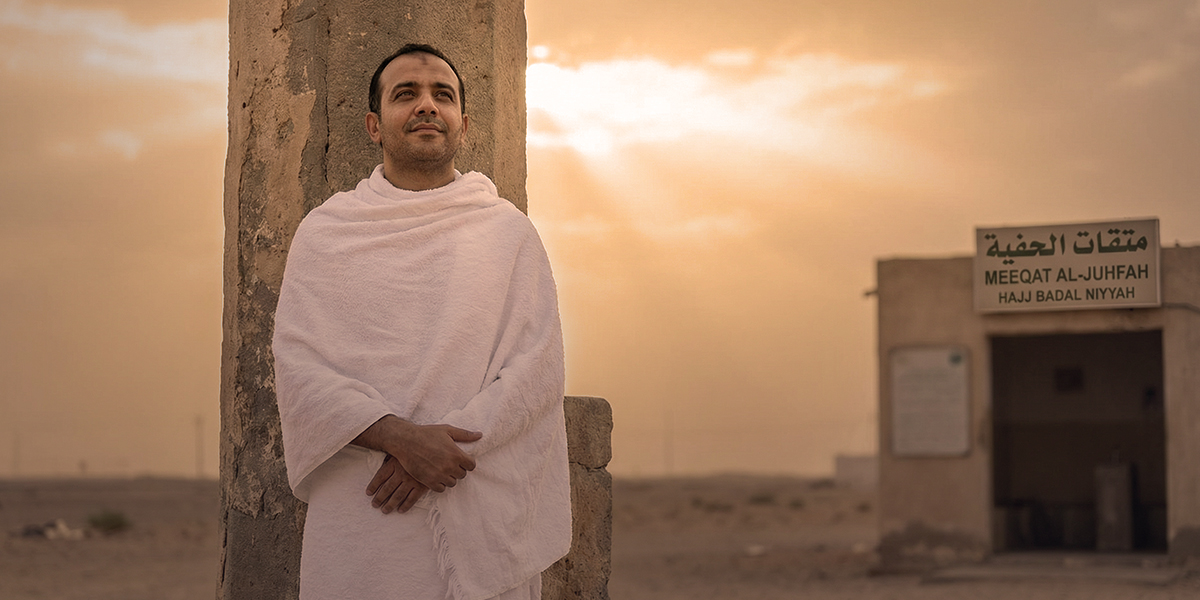
When the proxy assumes Ihram at the designated Miqat, their Niyyah must explicitly be to perform Hajj (or Umrah, in the case of Badal Umrah / Proxy Umrah) on behalf of the specific person for whom they are acting as a representative.
The Niyyah for Hajj Badal must be made at the Miqat before or while entering the state of Ihram. It cannot be made retrospectively after starting the rituals.
The proxy's intention must be purely for the sake of Allah, seeking His pleasure and the fulfillment of the religious duty for the beneficiary. Any ulterior motives, such as solely financial gain (beyond legitimate expenses) or showmanship, can corrupt the intention and diminish the spiritual value of the act.
The intention to perform the Hajj on behalf of the beneficiary should ideally remain present in the proxy's mind throughout the performance of the key rituals.
The person commissioning the Badal Hajj (the Aamir) must also have the sincere intention that this Hajj is being performed to fulfill the obligation of the beneficiary (whether it's themselves, if unable, or another person like a deceased parent). Their intention initiates the process.
Fiqh (Islamic jurisprudence) offers detailed guidance on various scenarios. If a proxy is commissioned and funded to perform Hajj Badal for a specific person, and they make a general Niyyah for Hajj at the Miqat while having that commission in mind, some scholars hold that the Hajj will still count for the beneficiary for whom they were appointed, as their overall purpose was to act as a proxy. However, it is always best and safest to make the Niyyah explicitly naming the person from the outset to avoid any ambiguity.
The Niyyah should also align with the type of Hajj intended for the beneficiary (e.g., Hajj Tamattu, Qiran, or Ifrad). If Hajj Tamattu is intended, the proxy will first make Niyyah for Umrah on behalf of the beneficiary, complete it, exit Ihram, and then on the 8th of Dhul-Hijjah, make a new Niyyah for Hajj on behalf of the same beneficiary and re-enter Ihram.
The emphasis on Niyyah underscores that Hajj Badal is not merely a mechanical execution of rituals. It is a deeply spiritual undertaking where the proxy's heart and intention are central to its validity and acceptance. Both the person commissioning the Proxy Hajj and the proxy performing it must approach this responsibility with utmost sincerity and a clear understanding of the critical role of Niyyah in ensuring that this significant act of worship – be it Hajj, Umrah, Badal Hajj, Hajje Badal, Proxy Hajj, Badal Umrah, or Proxy Umrah – serves its intended divine purpose.


.webp)


