.svg)
.png)
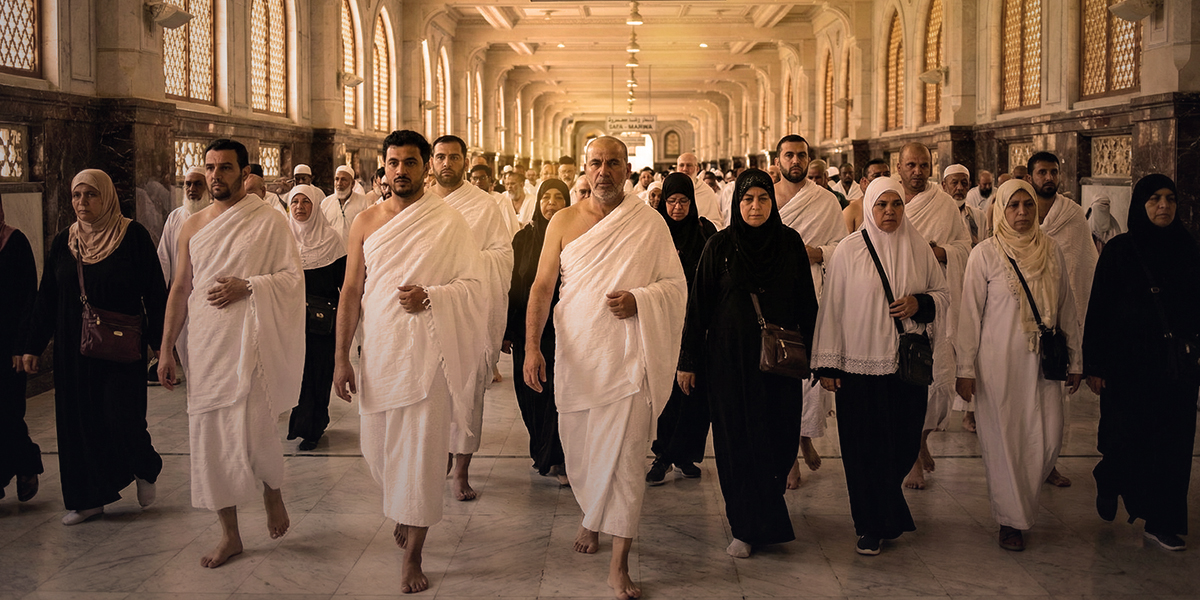
Among the most iconic and spiritually charged rituals of both Hajj and Umrah are Tawaf (circumambulation of the Kaaba) and Sa'i (walking between the hills of Safa and Marwa). These acts are not mere physical movements but are deeply imbued with historical significance, Quranic backing, and profound symbolism, representing core aspects of a Muslim's devotion and reliance on Allah. Understanding these rites is crucial for every pilgrim, including those performing Hajj Badal (also known as Badal Hajj, Hajje Badal, or Proxy Hajj) or Badal Umrah (Proxy Umrah), as these rituals must be performed with precise intention and adherence to tradition.
Tawaf is the act of circling the Kaaba seven times in an anti-clockwise direction. The Kaaba, a cube-shaped structure draped in black cloth, is the most sacred site in Islam, considered the House of Allah (Baitullah) and the qibla (direction of prayer) for Muslims worldwide. Pilgrims begin each circuit of the Tawaf from the Hajar al-Aswad (the Black Stone), a sacred stone set in one corner of the Kaaba. If possible, they kiss, touch, or gesture towards it (Istilam) at the start of each circuit while reciting "Bismillahi Allahu Akbar" (In the name of Allah, Allah is the Greatest).
The Quran mentions the Kaaba as a place of return and security for people, and the standing place of Abraham (Maqam Ibrahim) as a place of prayer (Surat Al-Baqarah, 2:125). The act of Tawaf mirrors the devotion of Prophet Ibrahim and his son Ismail, who rebuilt the Kaaba under divine guidance. Spiritually, Tawaf signifies the unity of Muslims in worship, all moving harmoniously around a central point, representing the idea that a believer's life should revolve around God. It is an act of continuous remembrance (Dhikr) and supplication (Dua). There are different types of Tawaf performed during Hajj and Umrah, including Tawaf al-Qudum (arrival Tawaf), Tawaf al-Ifadah (an essential pillar of Hajj), and Tawaf al-Wada (farewell Tawaf). For Umrah, the main Tawaf is Tawaf al-Umrah.
Following Tawaf and offering two Rak'ah of prayer (preferably near Maqam Ibrahim), pilgrims proceed to perform Sa'i. This ritual involves walking and sometimes hastening seven times between two small hills, Safa and Marwa, located near the Kaaba, now enclosed within the Masjid al-Haram complex. The Sa'i begins at Safa and ends at Marwa, with each trip from one hill to the other counting as one circuit.
The historical basis for Sa'i is the poignant story of Hajar, the wife of Prophet Ibrahim. Left in the barren valley of Mecca with her infant son Ismail, Hajar desperately ran seven times between Safa and Marwa in search of water when their supplies ran out. Her unwavering faith and reliance on Allah during this moment of extreme distress were rewarded with the miraculous appearance of the Zamzam Well, which gushed forth where Ismail's foot struck the ground. The Quran itself mentions Safa and Marwa as among the symbols of Allah (Surat Al-Baqarah, 2:158), sanctioning the act of walking between them during Hajj or Umrah.
Sa'i, therefore, symbolizes perseverance, hope, and absolute trust in Allah's providence. It reminds pilgrims of Hajar's fortitude and teaches that effort must be combined with faith.
When Hajj Badal or Badal Umrah is performed, the proxy pilgrim meticulously carries out both Tawaf and Sa'i with the intention of fulfilling these rites on behalf of the person they represent. The spiritual benefits and the symbolic lessons of devotion, unity (in Tawaf), and perseverance (in Sa'i) are central to the Proxy Hajj or Proxy Umrah experience. The validity of the Hajje Badal hinges on the correct performance of these and other core rituals. The proxy, acting on behalf of another, embodies the spirit of these acts, ensuring that the sacred connection to these historical and divinely ordained practices is maintained for the beneficiary. Thus, Tawaf and Sa'i remain pivotal expressions of faith, whether undertaken personally or through a representative in Hajj or Umrah.


.webp)


